The construction industry has always evolved alongside technology—from hand drafting to CAD, from manual surveying to GPS-guided equipment. Today, one of the most impactful advancements reshaping construction workflows is the use of drones (unmanned aerial systems).
Once seen as novelty tools, drones have become practical, cost-effective assets that improve accuracy, safety, and decision-making across all phases of a construction project.
A New Perspective on Jobsite Visibility
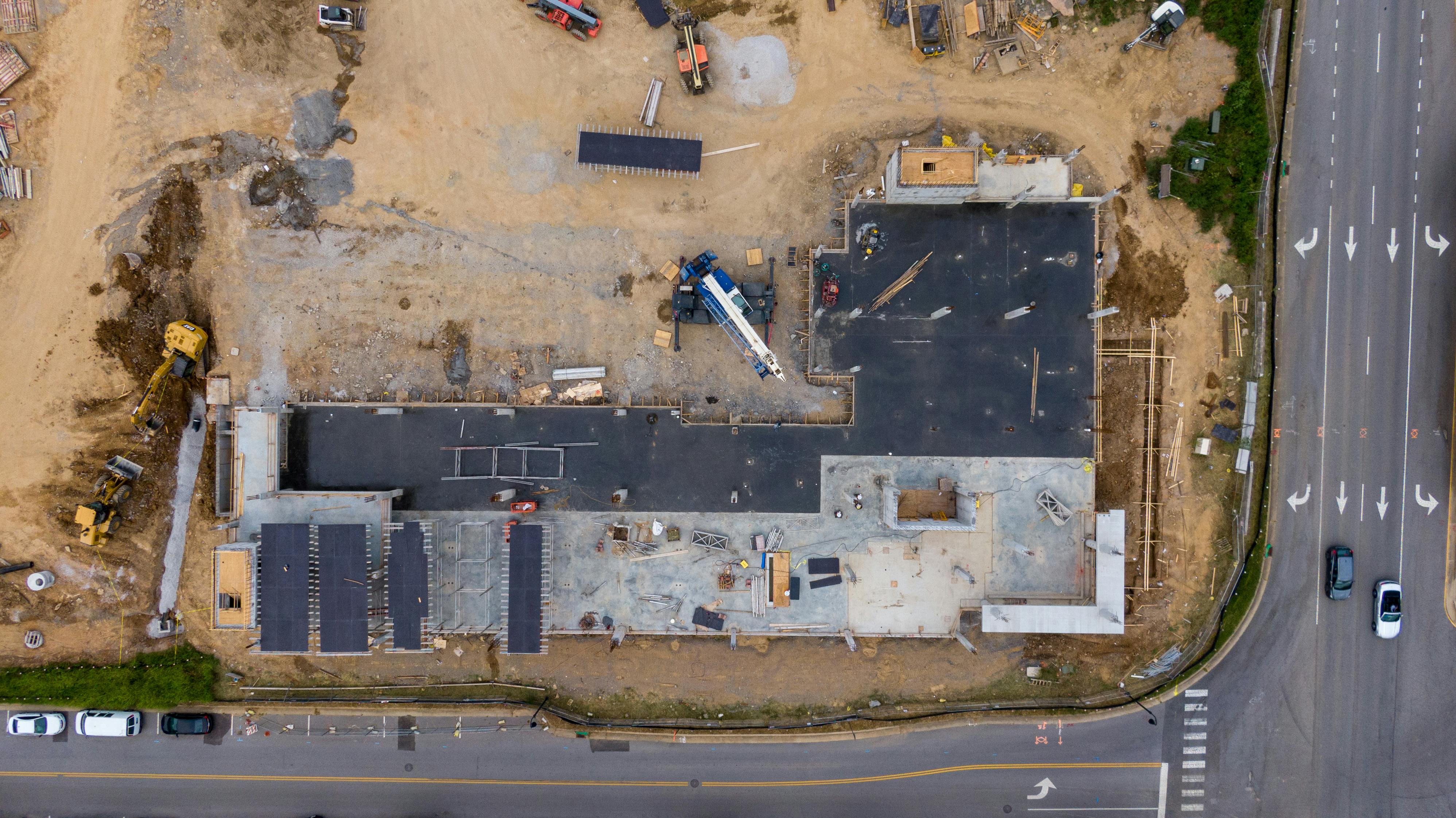
Traditional construction documentation relies on ground photography, manual measurements, and periodic site walks. While useful, these methods often miss the big picture.
Drones provide aerial visibility of an entire jobsite in minutes, allowing stakeholders to:
Monitor overall site progress
Identify logistical issues early
Document changes over time
Share consistent visual updates with remote teams
Regular drone flights create a visual timeline of a project that can be referenced long after construction is complete.
Accurate Mapping and Measurements
Modern construction drones are not just cameras in the sky—they are precision measurement tools.
Using photogrammetry and, in some cases, RTK (Real-Time Kinematic) positioning, drones can generate:
High-resolution orthomosaic maps
Topographic surveys
Cut and fill volume calculations
Elevation models and contours
These deliverables integrate directly with CAD, BIM, and GIS software, reducing reliance on time-consuming ground surveys while maintaining professional-grade accuracy.
Improved Safety and Risk Reduction
Construction sites are inherently hazardous environments. Drones reduce risk by minimizing the need for workers to physically access dangerous or hard-to-reach areas.
Common safety applications include:
Roof inspections
Structural assessments
Tower, crane, and façade inspections
Post-storm or damage evaluations
By keeping personnel on the ground while still collecting critical data, drones help lower liability and improve overall site safety.
Progress Tracking and Stakeholder Communication
One of the most valuable uses of drones in construction is progress tracking.
Aerial imagery and video provide:
Clear, unbiased documentation of work completed
Visual verification for lenders, owners, and inspectors
Support for pay applications and dispute resolution
Transparent communication with clients and investors
Instead of relying solely on written reports, project teams can show real-time progress with visual proof.
Faster Decisions, Better Outcomes
Construction delays are expensive. Drones help teams identify issues earlier—before they become costly problems.
From spotting grading errors to monitoring material staging and site access, drone data enables faster, more informed decision-making. When combined with regular flight schedules, this insight becomes a powerful management tool rather than a reactive solution.
Professional Drone Services Matter
It’s important to note that construction drone operations should be handled by FAA Part 107-certified pilots who understand both aviation regulations and construction workflows. Proper planning, consistent flight paths, and accurate data processing make the difference between useful imagery and actionable intelligence.
Professional drone service providers specializing in construction can tailor deliverables to match project goals, whether that’s mapping, inspections, or marketing documentation.
For companies interested in learning more about professional construction drone applications, providers like
Southview Drone Imaging offer insight into how aerial data can be integrated effectively into modern construction projects.
The Future of Construction Is Aerial
As technology continues to advance, drones are becoming a standard tool rather than an optional add-on. With improved sensors, better accuracy, and tighter integration with project management platforms, aerial data will play an even larger role in how construction projects are planned, executed, and documented.
For builders, developers, and engineers looking to stay competitive, embracing drone technology is no longer about innovation—it’s about efficiency, safety, and smarter decision-making.
About the Author:
Ted Smialek is a construction industry professional with 35 years of experience. An expert in everything from Division 10 products and toilet partitions to building structure and project phasing he has had his hand in all stages of projects from on-site management and installation to project visualization. Located in DeLand, Florida he combines his expertise in construction as well as his FAA Part 107 pilots license to offer professional asset inspections and facility fly-throughs for local professionals. To learn more about how drone imaging can assist you in your construction project visit him at
southviewdroneimaging.com